

Osteopathy and Childhood: What Are the Benefits for Supporting Your Child’s Development?
The first years of life are an extraordinary time of discovery, learning, and change.
With the arrival of summer, a baby hat becomes an essential accessory for all outings. The skin and eyes of infants and young children are much more sensitive to UV rays than those of adults—and the summer sun can cause a baby to get sunburned in less than 10 minutes. How do you choose the right hat, and how do you get your baby to wear it? We’ll explain everything. ☀️
Infants’ skin contains less melanin (the natural protective pigment) than that of adults. A sunburn in a baby or young child is therefore not only painful but also potentially dangerous: it can lead to dehydration and hyperthermia, and according to pediatricians, sunburns during childhood significantly increase the risk of melanoma in adulthood.
The head is particularly vulnerable—it accounts for a large surface area relative to the body’s volume in infants, and babies’ fine hair does not provide sufficient protection.
Maximum protection: the wide brim (at least 6–7 cm) protects your face, ears, AND the back of your neck. Ideal for extended exposure to the sun—at the beach, on a picnic, or in the garden. Make sure it fits securely on your head and doesn’t fall over your eyes.
Lightweight and held securely in place by an elastic band or Velcro, it protects the face. The removable neck guard (often sold separately) is essential for complete protection. A popular style because it’s easy to put on and hard for babies to take off.
The mid-size style—lighter than a wide-brimmed hat, yet more protective than a simple cap. This lightweight cotton bucket hat is perfect for everyday outings in the stroller or at the park.
Made from fabric with UPF 50+ certified UV protection (equivalent to SPF 50 sunscreen). Blocks more than 98% of UV rays. Essential for prolonged sun exposure—at the beach, on hikes, or during water activities. Pair it with baby sunscreen for maximum protection.
Measure your baby's head circumference with a flexible tape measure, just above the ears.
Choose styles with an adjustable head circumference (elastic or Velcro)—babies' heads grow quickly, and a hat that's too small or too large won't stay on.
The main challenge: the baby takes off his hat as soon as you put it on him. Here are a few strategies that work:
A hat alone isn't enough. Comprehensive sun protection for babies depends on three factors:
And of course: Avoid direct sun exposure between 11 a.m. and 4 p.m. — even with full protection.
To dress your baby just right this summer, check out our comprehensive guide on how to dress your baby in the summer and our selection of lightweight onesies for hot days.
From the very first time they go out in the sun—even when they’re just a few days old—newborns are particularly vulnerable to UV rays. Before 6 months of age, avoid any direct exposure to the sun, even when wearing a hat.
No—it complements it. A hat effectively protects the head, face, and back of the neck. Sunscreen is necessary for all other exposed areas: hands, arms, legs, and feet.
Most cotton baby hats are machine-washable at 30°C. Avoid using a dryer, as it can cause the cotton to shrink and distort the shape. Lay flat to dry to preserve the brim.
Wide-brimmed hats, sun hats, and lightweight caps made from certified cotton: PetitMaxou offers a selection of headwear suitable for all ages to protect your baby from the sun this summer. Free shipping throughout the EU.
→ View the entire collection of baby clothes and accessories PetitMaxou
The baby hat trends for summer 2026 are leaning toward natural materials (raffia, organic cotton, linen) in shades of terracotta, khaki, off-white, and sky blue. The most popular styles are the floppy hat with wavy brim and the straw hat with a removable neck flap. For babies, the piqué cotton bucket hat remains a safe bet—it doesn’t lose its shape from sweat and is easy to wash. Hats with patterns (strawberries, watermelons, sea creatures) are very popular for trips to the beach and summer picnics.
At the beach, a hat is even more important than in the city—sand and water reflect UV rays and increase exposure. Choose a hat with UPF 50+ protection and a neck flap. Lightly dampen the hat in hot weather—the evaporation will cool your baby’s head. Bring a spare hat if your baby is playing in the water—a hat that gets wet and dries in the sun may shrink.
To summarize this guide on summer baby hats in a few key points:
PetitMaxou selects all of its products based on these strict criteria. Our team is available to help you if you’re having trouble deciding between several models. Free shipping throughout the European Union; returns accepted within 14 days.
Our blog is full of practical guides to help you through the first few months with your baby. Here are a few articles on this topic that might interest you:
The first years of life are an extraordinary time of discovery, learning, and change.
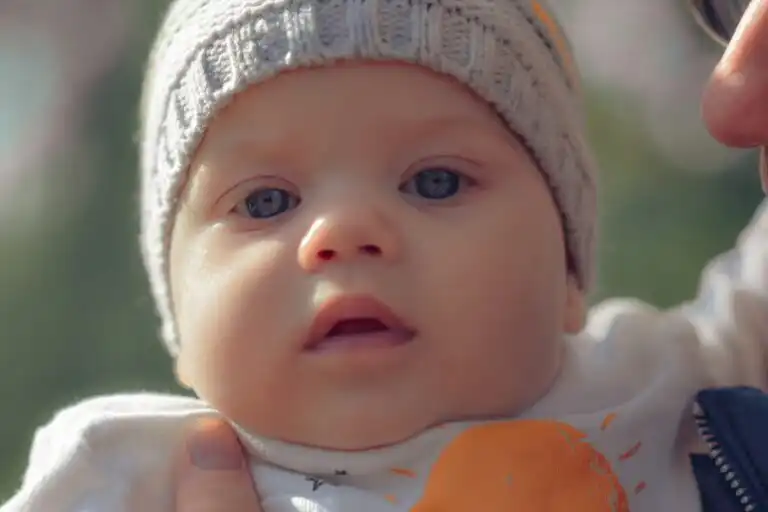
Baby sunscreen is one of the summer essentials for new parents —
Manage your cookie preferences below:
Essential cookies help the website work properly by enabling basic functions. (No marketing tracking)
These cookies are needed for adding comments on this website.
Google Tag Manager simplifies the management of marketing tags on your website without code changes.
These cookies are used for managing login functionality on this website.
Statistical cookies gather info anonymously. This helps us understand how folks use our website.
SourceBuster is used by WooCommerce for order attribution based on user source.
You can find more information in our Privacy Policy and Privacy Policy.