

Many parents ask themselves this question: at what age should you start brushing a baby's teeth From the very first tooth? Even before? And which toothbrush should you choose for a toddler? This guide gives you all the answers to look after baby's oral health right from the start. 🦷
📅 At what age should you start brushing a baby's teeth?
The response from the WHO and paediatric dentists is unanimous: from the first tooth, generally between 6 and 12 months. Some professionals even recommend starting before the teeth appear, by cleaning the gums with a damp compress or a silicone finger cot.
Why so early? Because the milk teeth are not insignificant they are used for chewing, speaking, and above all, maintaining space for the permanent teeth. A cavity in a milk tooth can affect the permanent tooth developing underneath it.
🪥 How to choose a baby's toothbrush?
Before 12 months: finger brush or soft toothbrush
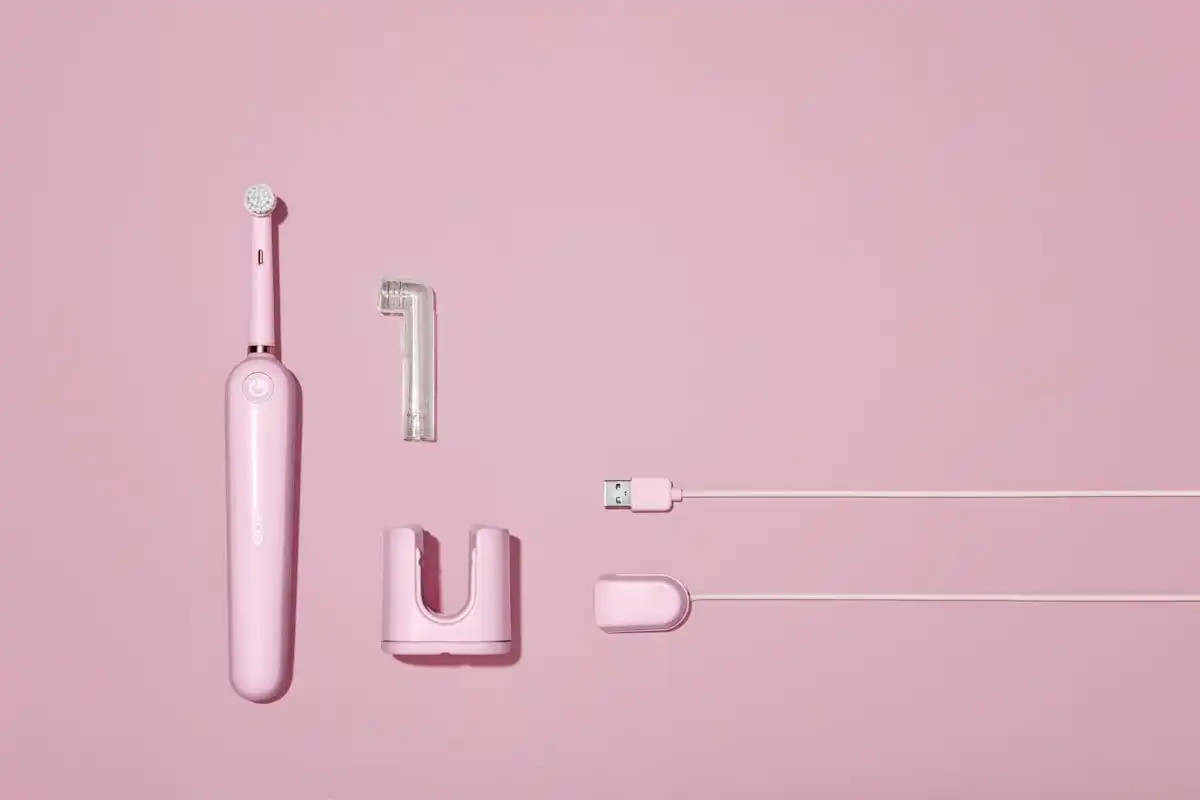
A soft silicone finger cot on the parent's finger, or a toothbrush with a very small head and ultra-soft bristles. The goal is not yet vigorous brushing, but a gradual introduction to contact on the teeth and gums.
From 12 months to 3 years: the 360° toothbrush
The 360-degree toothbrush is particularly well suited for toddlers: its bristles surround the entire tooth 360 degrees, which allows for effective cleaning even when the child's brushing is still imprecise. No need for a perfect technique — the brush does the work.
It is also safer: the rounded head reduces the risk of gum injury if the child wriggles. To make brushing fun right from the start, choose bright colours and an ergonomic handle suited to little hands. Our children's 360° toothbrush is designed for exactly that — soft bristles, playful design, loved by children aged 1 to 6.
From 3-4 years: manual or electric toothbrush
The child can gradually learn to hold the brush on their own. Electric toothbrushes with a built-in timer are very effective for ensuring the recommended 2 minutes of brushing — and children often love the «gadget» aspect.
🧴 Toothpaste: which one and how much?
The guidelines have changed in recent years:
- From 6 months to 3 years fluoridated toothpaste containing a minimum of 1000 ppm, amount the size of a grain of rice
- From 3 to 6 years old 1,000 to 1,450 ppm fluoride toothpaste, pea-sized amount
- After 6 years adult toothpaste, normal amount
Fluoride is essential for preventing tooth decay — do not choose a «fluoride-free» toothpaste for a baby under the pretext that it is natural. Fluoride-free toothpastes do not protect against tooth decay.
🕐 The brushing routine: how to establish good habits
- twice a day morning after breakfast, evening after the last meal and before bedtime
- 2 minutes minimum — use an egg timer or a song to make the duration fun
- Parents first, child second until the age of 7 or 8, parents must finish the brushing to make sure that all surfaces are reached
- Bedtime brushing for babies: lay baby on your knees to see better and reach all the teeth
For support baby's development at each step, remember to integrate tooth brushing into the evening routine from the very first months.
😬 Milk teeth: schedule and pain
The first teeth generally appear between 6 and 12 months, often in this order:
- Lower central incisors (6-10 months)
- Upper central incisors (8-12 months)
- Lateral incisors (9-13 months)
- First molars (13-19 months)
- Canines (16-22 months)
- Second molars (25-33 months)
Teething can cause pain, irritation, and night waking. Refrigerated teething rings, mesh feeders and soothing gels without lidocaine can provide relief.
❓ FAQ — Baby toothbrush
My baby refuses to let me brush their teeth — what should I do?
Turn this into a game: let him hold his own toothbrush while you brush with another, sing a song, use a toothbrush featuring a character he likes. Never force it — but don't give up either: oral hygiene is too important.
Should you rinse after brushing?
No, or very little for young children. Spitting without rinsing allows the fluoride to stay on the teeth for longer. Gradually teach the child to spit without swallowing.
When should I see the dentist for the first time?
Ideally as soon as the first tooth appears, or before the age of one. This first visit is often exploratory — so that the child gets used to the dental surgery without stress. In France, a consultation is fully covered at 3, 6, 9, 12 and 15 years of age as part of the M’T Dents scheme.
🛍️ Children’s toothbrushes at PetitMaxou
Our 360° toothbrush is designed to make brushing easy and effective from the very first teeth. Ultra-soft bristles, rounded protective head, colourful ergonomic handle. Free delivery throughout the EU.
→ See the 360° PetitMaxou children’s toothbrush
🦷 Child-friendly oral care products
Beyond the toothbrush, other products can complement your child's oral hygiene:
- Children's dental floss : as soon as teeth touch (around 2-3 years of age), brushing alone no longer cleans the interdental spaces. Children's flossers make this step accessible from 4-5 years of age.
- The plaque disclosing tablet disclosing tablets that reveal residual dental plaque after brushing — an excellent educational tool for teaching children where they are not brushing properly.
- The children's mouthwash from 6 years of age only, for children who can spit out without swallowing.
Dental health is part of a holistic approach to well-being. Discover our tips on as well baby weaning - a balanced diet right from the start also protects teeth.
😄 Making teeth brushing fun: 5 ideas
Brushing teeth can quickly become a daily battle. Here are a few tips to turn it into a fun moment: let the child choose their own toothbrush from two proposed options — the feeling of control reduces resistance. Use a 2-minute sand timer with coloured sand — children love watching the time tick away. Create a personalised brushing song using the child's first name. Make the teeth «talk» like characters asking to be cleaned. And above all, brush your own teeth at the same time — imitation remains the best way to learn.
🏥 Role of the paediatrician and the dentist in baby's dental health
A baby’s oral health is a topic in its own right during paediatric consultations. Don’t hesitate to ask your paediatrician questions as soon as your baby’s first teeth appear: about brushing techniques, fluoride supplements if necessary depending on your tap water, and foods to limit to protect the enamel. In France, the ‘M’T Dents’ check-up is offered at the age of 3 — this is the first dental appointment fully covered by the French National Health Insurance scheme. Make the most of it: it’s the ideal time for an initial check-up and to get your child used to the dental surgery without any anxiety.